
 Wildlife
of Nepal
Resources & credits
Sources · Conservation status · Photography
About this guide
A growing field guide to the wildlife of Nepal — mammals, birds, reptiles and amphibians. This edition covers 1,301 species, with photographs where we have found one.
How the species list was built
This guide is being expanded toward the full national checklist; species are published only when a reusable photograph is available. It leads with the species visitors most hope to see, plus a selection of characteristic birds, reptiles and amphibians from the Terai, mid-hills and Himalaya.
Nepal's exceptional elevation range puts subtropical grassland, temperate forest and alpine wildlife within one compact country. Taxonomy and identifications are reviewed as the guide grows.
Reading the conservation status
Mammal status labels are Nepal's own national categories from The Status of Nepal's Mammals: The National Red List Series (2011). They describe how threatened a species is within Nepal, which can differ from its status worldwide. Birds, reptiles and amphibians show no status label for now, until they can be checked against Nepal's national assessments.
Reference sources
- Jnawali, S.R. et al. (2011). The Status of Nepal's Mammals: The National Red List Series. Department of National Parks and Wildlife Conservation, Kathmandu — mammal status labels
- DNPWC and Bird Conservation Nepal (2018). Birds of Nepal: An Official Checklist. Kathmandu — bird species list
- AviList: The Global Avian Checklist © 2026 by the AviList Core Team, licensed under CC BY 4.0 — used to check current bird names and to note where it treats a species as a subspecies of another
- Nepal Department of National Parks and Wildlife Conservation — protected areas and official visitor information
- iNaturalist · Nepal — observation records and photographs
- Bird Conservation Nepal — bird research and conservation
- AmphibiaWeb — amphibian taxonomy and distribution
- The Reptile Database — reptile taxonomy and distribution
mammalwatching.com

Mammal Watching (mammalwatching.com) is a community website for people who watch wild mammals, founded in 2005 by Jon Hall. It brings together trip reports, a directory of sites and guides, a forum, a global mammal checklist, a library of mammal sound recordings and gear advice. Its trip reports are a useful companion when planning where to look for a particular species.
The site includes many examples of how responsible mammal-watching tourism brings income to places with few other sources, giving local people a reason to protect wildlife. These include Brazil's Pantanal, where ranchers now earn more from jaguar tourism than from cattle, and visits that have helped fund research on mandrills in Gabon and spectacled bears in Ecuador. Sightings recorded by mammalwatchers have also documented range extensions, new country records and rediscoveries of "lost" species.
Trip reports
Field trip reports from Royle Safaris and Wise Birding Holidays, reproduced in full with the authors’ photographs. Every photo is credited to its photographer.
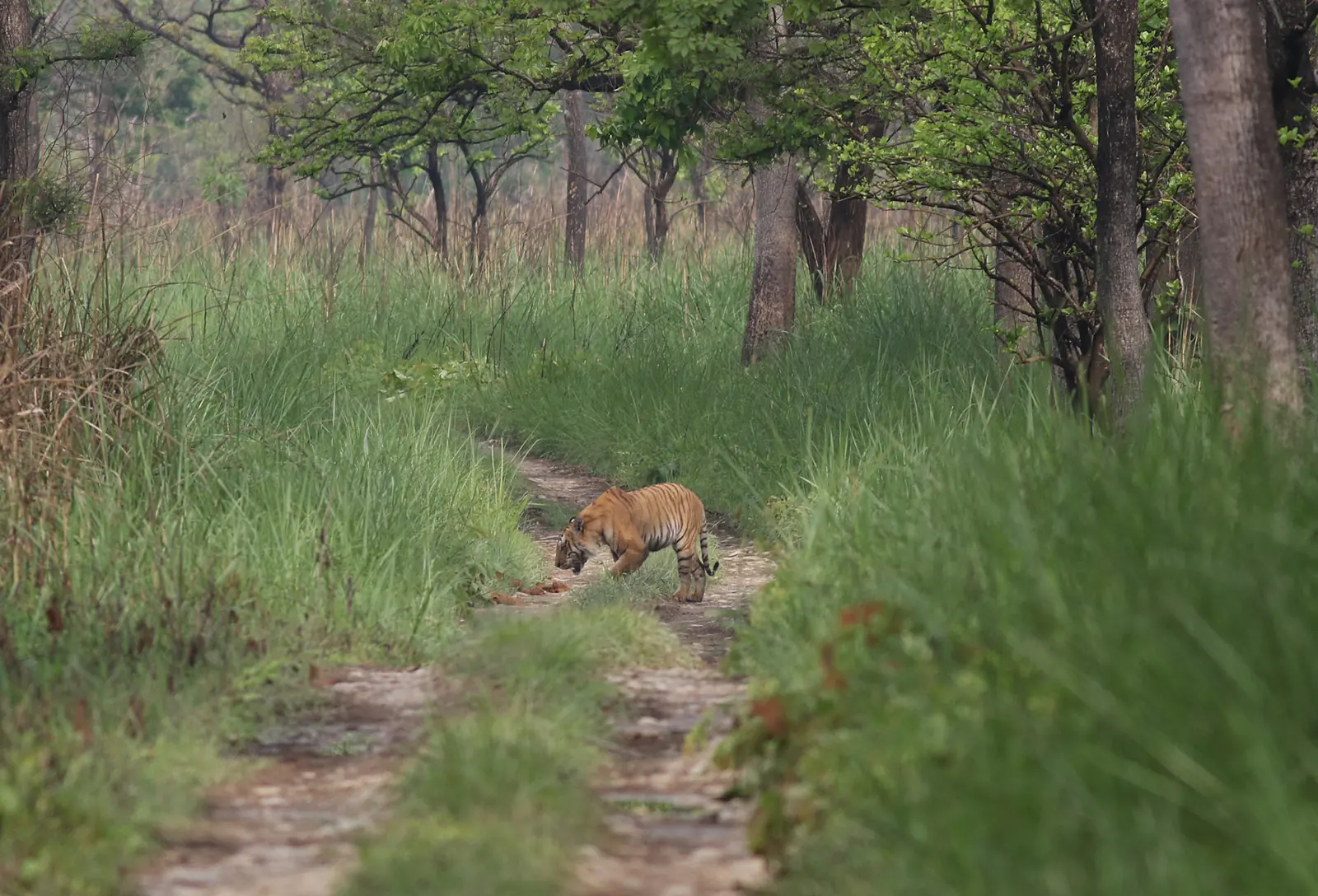 Trip report · Wise Birding Holidays · 2019Nepal in April 2019: Satyr Tragopan, Bengal Florican, a Tiger and a Sloth BearWise Birding Holidays' April 2019 tour, led by Chris Townend and Suchit Basnet, spent two weeks in three areas of Nepal: the mountains around Thumke village near the Indian border, Koshi Tappu Wildlife Reserve and Chitwan National Park. The group recorded 310 bird species, including Satyr Tragopan, Bengal Florican, Great Hornbill and Blue-bearded Bee-eater, and 23 mammals, with a male Bengal Tiger, a Sloth Bear at dusk, 14 Indian Rhinoceros in one day and South Asian River Dolphins. The report has a day-by-day account, photographs and the full bird and mammal lists.
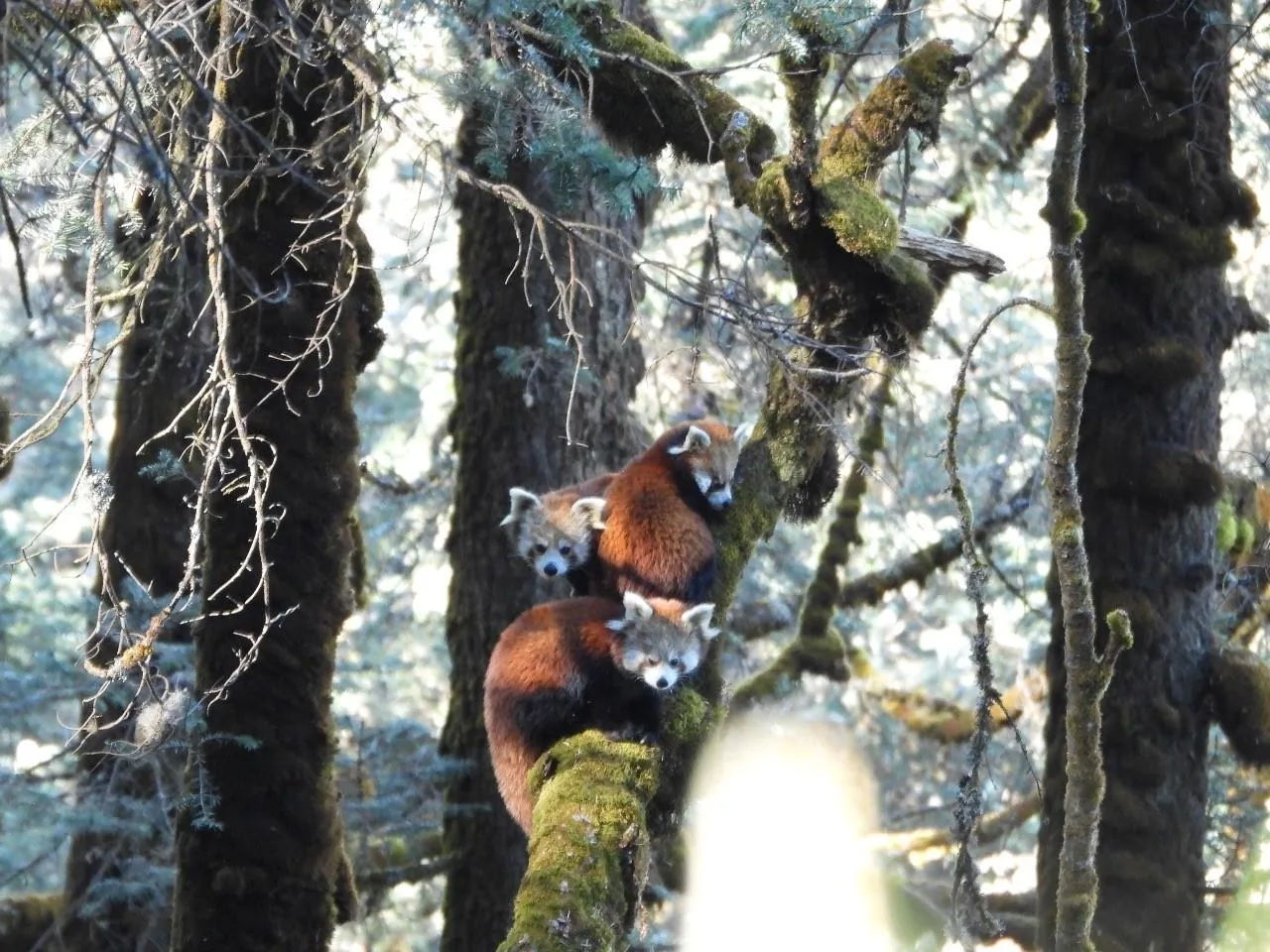 Trip report · Royle Safaris · 2023Langtang in November 2023: a clouded leopard expedition with red pandas and musk deerIn November 2023 Royle Safaris took a small group back to Langtang National Park to look for the mainland (Indochinese) clouded leopard, camping deep in the forest with special permits and a local clouded leopard researcher. No cat was seen, but guide Mike Gordon found fresh clouded leopard footprints, and the group had three Himalayan Red Pandas resting together on one branch, a Himalayan Musk Deer beside the trail, Hodgson’s Giant Flying Squirrel, Yellow-throated Martens, Assamese Macaques and Nepal Grey Langurs. The report has the full mammal and bird lists.
Planning a visit
National park entry rules, fees, trekking permits and road access change often. Check current conditions with the park office, conservation authority or your operator before travelling.
Wildlife sightings are never guaranteed. The species listed for each area are what is realistically possible there, not what you should expect on a given day.
Your plans and sightings
Your trip plan and sightings are saved in this browser, on this device only — we never see them. Clearing your browser data will clear them too, so download the PDF if you want a copy to keep. Email buttons open a draft in your mail app; nothing is sent until you send it.
Photo credits
Every species in this edition now has its own reusable photograph. Images come from verified iNaturalist observations or Wikimedia Commons, plus a few used with the photographer's permission; photographer, source and licence details are preserved in the photo information panel.