
 Wildlife
of Nepal
House Swift
Nightjars, Frogmouths & Swifts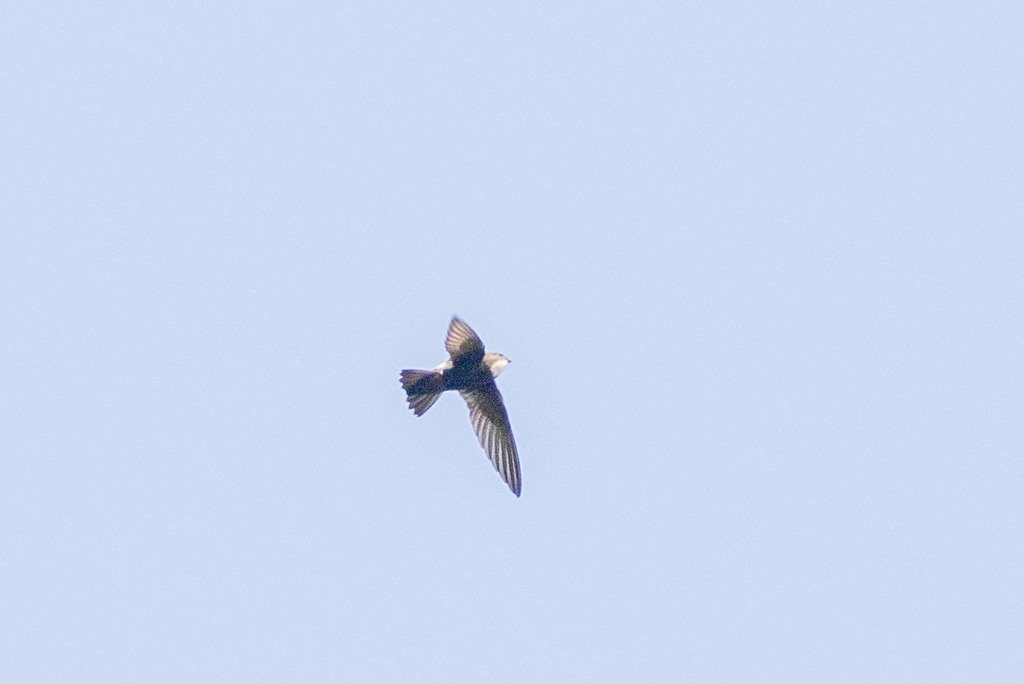
Photo: (c) WATANABE Hitoshi 渡辺仁, some rights reserved (CC BY) · CC-BY (May be cropped or resized)
Apus nipalensis
Also known as: Apus affinis nipalensis, Cypselus nipalensis
AviList (2026) treats this bird as a subspecies, Apus affinis nipalensis, of the Little Swift (Apus affinis), which is not listed separately on this site. IOC lists it as a separate species.
Basic stats
Diet
Insects, caught in the air
Habitat
Cliffs and urban areas; under roof overhangs and in tunnels
Range
Nepal to south-eastern China, Japan and Southeast Asia
Clutch size
1–5 eggs
Incubation period
20–30 days
Size
14–16cm
Weight
About 20–35g
The house swift is a small bird, but a medium-sized swift, 14 to 16cm long and weighing about 20 to 35g. It has black plumage, darker than the little swift, with a white rump band and a white throat patch and a dark, slightly forked tail. It was formerly considered a subspecies of the little swift. It is found from Nepal to south-eastern China and Japan and in parts of Southeast Asia (Wikipedia, general species account).
It has been found in the mountainous regions of Nepal and in cities and towns in China, Vietnam and Hong Kong. It is highly aerial and nests in cliffs or in urban areas, under roof overhangs or in tunnels. It builds a nest by sticking leaves, twigs and feathers together with saliva, with generally two broods a year. Clutches vary from one to five eggs, incubated for 20 to 30 days.
Quick answers
- What does the House Swift eat?
- Insects, caught in the air
- What habitat does the House Swift live in?
- Cliffs and urban areas; under roof overhangs and in tunnels
- Where is the House Swift found?
- Nepal to south-eastern China, Japan and Southeast Asia
- How many eggs does the House Swift lay?
- 1–5 eggs
- How long are the eggs of the House Swift incubated?
- 20–30 days
- How big is the House Swift?
- 14–16cm
- How much does the House Swift weigh?
- About 20–35g
In Nepal
GBIF holds 790 records of the House Swift from 12 protected areas in Nepal, dated 1978 to 2024. Most come from Shivapuri Nagarjuna National Park and Chitwan National Park.
Where it has been recorded
- Shivapuri Nagarjuna National Park 205 records, latest 2024
- Chitwan National Park 169 records, latest 2024
- Raniban Forest (Pokhara) 142 records, latest 2024
- Annapurna Conservation Area 136 records, latest 2024
- Langtang National Park 42 records, latest 2024
- Bardiya National Park 33 records, latest 2024
- Koshi Tappu Wildlife Reserve 22 records, latest 2024
- Parsa National Park 15 records, latest 2024
Plus 4 more sites.
Covered in our place guides: Chitwan National Park, Annapurna Conservation Area, Langtang National Park, Koshi Tappu Wildlife Reserve, Sagarmatha National Park.
Also in our other guides: Bhutan, Malaysia, Sulawesi, Sumatra.
Records: GBIF occurrence data matched to park boundaries (© OpenStreetMap contributors, ODbL; Wikidata). Counts show recording effort, not how common the species is.