
 Wildlife
of Nepal
Terai Grey Langur
Monkeys, Gibbons, Lorises & Colugo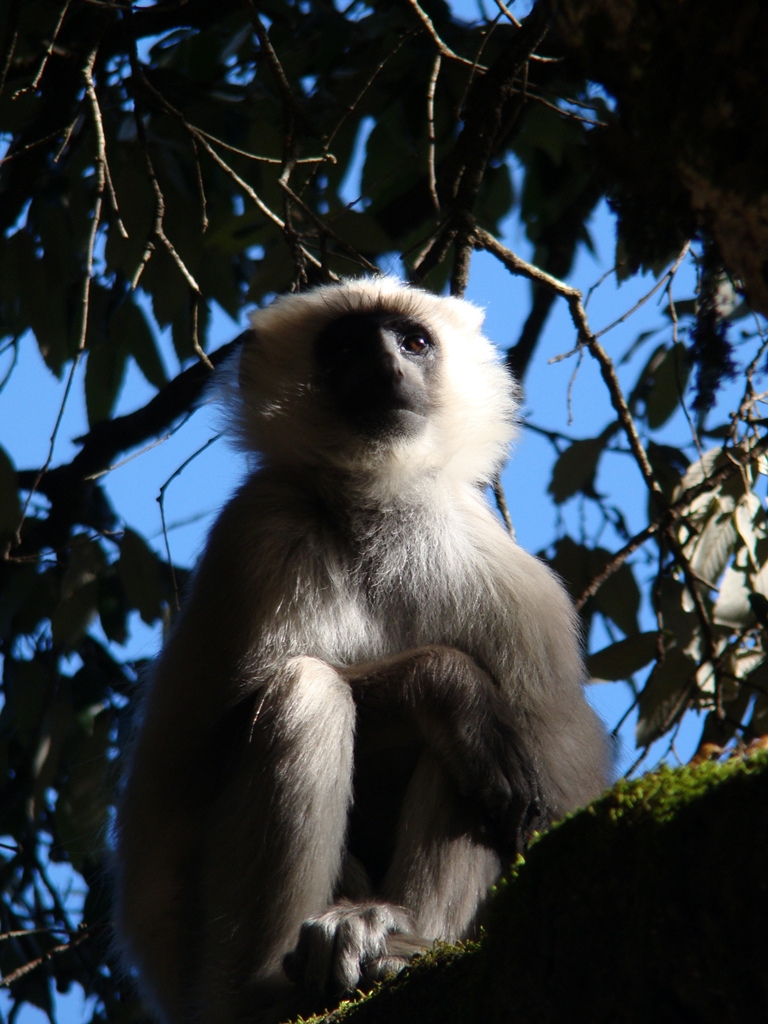
Photo: Nabarunsadhya · CC0
Semnopithecus hector
Basic stats
Diet
Leaves
Habitat
Sal forest, moist deciduous forest of the Siwaliks and oak forest, 150–1,600m
Range
Himalayan foothills of northern India, Nepal and south-western Bhutan
The Tarai gray langur is an Old World monkey formerly treated as a subspecies of the northern plains gray langur. It lives in the Himalayan foothills from Rajaji National Park in India to south-western Bhutan, including Nepal. Its habitat runs from moist deciduous forest in the Siwalik Hills to oak forest, at altitudes of 150 to 1,600m (Wikipedia, general species account).
It is diurnal and lives in the top canopy of sal forest in India and Nepal. The monkeys eat leaves and live in groups containing several males and females, and groups have been seen feeding in orchards and crop fields outside Rajaji National Park. The population is fragmented, with a 2003 report estimating up to fifty separate subpopulations. Nationally Least Concern (Nepal National Red List 2011).
Quick answers
- What does the Terai Grey Langur eat?
- Leaves
- What habitat does the Terai Grey Langur live in?
- Sal forest, moist deciduous forest of the Siwaliks and oak forest, 150–1,600m
- Where is the Terai Grey Langur found?
- Himalayan foothills of northern India, Nepal and south-western Bhutan
In Nepal
GBIF holds 128 records of the Terai Grey Langur from 5 protected areas in Nepal, dated 1905 to 2022. Most come from Bardiya National Park and Chitwan National Park.
Where it has been recorded
- Bardiya National Park 58 records
- Chitwan National Park 42 records, latest 2009
- Banke National Park 14 records, latest 2022
- Shukla Phanta National Park 11 records, latest 1905
- Parsa National Park 3 records
Covered in our place guides: Chitwan National Park.
Records: GBIF occurrence data matched to park boundaries (© OpenStreetMap contributors, ODbL; Wikidata). Counts show recording effort, not how common the species is.