
 Wildlife
of Nepal
Asian Palm-swift
Nightjars, Frogmouths & Swifts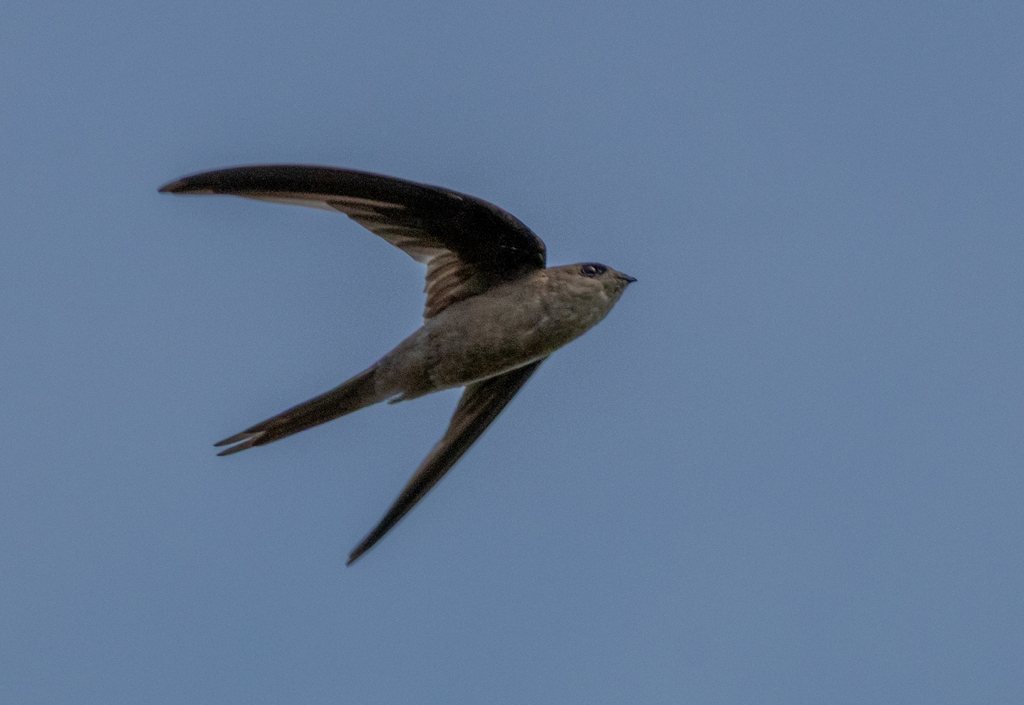
Photo: (c) sunnyjosef, some rights reserved (CC BY) · CC-BY (May be cropped or resized)
Cypsiurus balasiensis
Basic stats
Diet
Insects, caught on the wing
Habitat
Open country and cultivation, strongly associated with palms
Range
Tropical Asia from India to the Philippines
Clutch size
Usually 2–3 eggs
Size
About 13cm
The Asian palm swift is a small, slender swift about 13cm long, mainly pale brown, with long swept-back wings shaped like a crescent or boomerang and a long, deeply forked tail that is usually held closed. The call is a loud, shrill scream. It was formerly treated as the same species as the African palm swift (Wikipedia, general species account).
It is a common resident breeder from India to the Philippines, in open country and cultivation and strongly associated with palms. The down-and-feather nest is glued to the underside of a palm leaf with saliva, which also fixes the usually two or three eggs in place. Swifts spend most of their lives in the air catching insects and drink on the wing.
Quick answers
- What does the Asian Palm-swift eat?
- Insects, caught on the wing
- What habitat does the Asian Palm-swift live in?
- Open country and cultivation, strongly associated with palms
- Where is the Asian Palm-swift found?
- Tropical Asia from India to the Philippines
- How many eggs does the Asian Palm-swift lay?
- Usually 2–3 eggs
- How big is the Asian Palm-swift?
- About 13cm
In Nepal
GBIF holds 202 records of the Asian Palm-swift from 4 protected areas in Nepal, dated 1985 to 2024. Most come from Chitwan National Park and Koshi Tappu Wildlife Reserve.
Where it has been recorded
- Chitwan National Park 103 records, latest 2024
- Koshi Tappu Wildlife Reserve 90 records, latest 2024
- Shukla Phanta National Park 5 records, latest 2022
- Bardiya National Park 4 records, latest 2024
Covered in our place guides: Chitwan National Park, Koshi Tappu Wildlife Reserve.
Also in our other guides: China, India, Malaysia, Sri Lanka, Sulawesi, Sumatra, Thailand, Vietnam.
Records: GBIF occurrence data matched to park boundaries (© OpenStreetMap contributors, ODbL; Wikidata). Counts show recording effort, not how common the species is.