
 Wildlife
of Nepal
Bar-headed Goose
Ducks, Geese & Grebes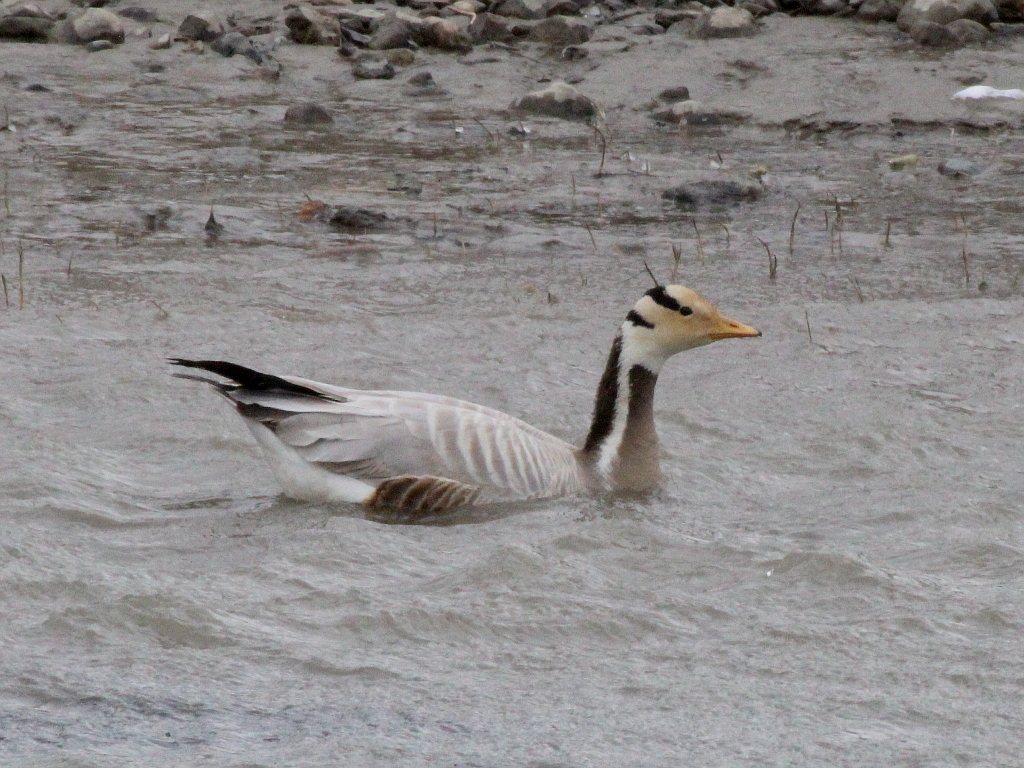
Photo: (c) Andrew Bazdyrev, some rights reserved (CC BY) · CC-BY (May be cropped or resized)
Anser indicus
Basic stats
Habitat
Breeds colonially near mountain lakes in Central Asia; winters on South Asian wetlands
Range
Breeds in Tibet, Kazakhstan, Mongolia and Russia; winters from Assam to Tamil Nadu
Clutch size
3–8 eggs
Size
71–76cm
Weight
1.87–3.2kg
The bar-headed goose is a pale grey, mid-sized goose, 71 to 76cm long and 1.87 to 3.2kg, easily told from other grey geese by the black bars on its otherwise white head. It breeds in colonies of thousands near mountain lakes in Central Asia and winters in South Asia as far south as peninsular India. It is known for the extreme altitudes it reaches when migrating across the Himalayas (Wikipedia, general species account).
It has been heard flying across Mount Makalu at 8,481m, though a report of birds over Everest is unverified. A 2011 study found tagged geese peaking at around 6,400m, with one reaching 7,290m, and most high flights were at night. It migrates south from Tibet, Kazakhstan, Mongolia and Russia over the Himalayas and lays three to eight eggs in a ground nest.
Quick answers
- What habitat does the Bar-headed Goose live in?
- Breeds colonially near mountain lakes in Central Asia; winters on South Asian wetlands
- Where is the Bar-headed Goose found?
- Breeds in Tibet, Kazakhstan, Mongolia and Russia; winters from Assam to Tamil Nadu
- How many eggs does the Bar-headed Goose lay?
- 3–8 eggs
- How big is the Bar-headed Goose?
- 71–76cm
- How much does the Bar-headed Goose weigh?
- 1.87–3.2kg
In Nepal
GBIF holds 411 records of the Bar-headed Goose from 7 protected areas in Nepal, dated 1982 to 2026. Most come from Chitwan National Park and Koshi Tappu Wildlife Reserve.
Where it has been recorded
- Chitwan National Park 289 records, latest 2026
- Koshi Tappu Wildlife Reserve 87 records, latest 2024
- Bardiya National Park 16 records, latest 2024
- Sagarmatha National Park 6 records, latest 2017
- Annapurna Conservation Area 6 records, latest 2023
- Rara National Park 4 records, latest 2020
- Shey Phoksundo National Park 3 records, latest 2024
Covered in our place guides: Chitwan National Park, Koshi Tappu Wildlife Reserve, Sagarmatha National Park, Annapurna Conservation Area.
Also in our other guides: Bhutan.
Records: GBIF occurrence data matched to park boundaries (© OpenStreetMap contributors, ODbL; Wikidata). Counts show recording effort, not how common the species is.