
 Wildlife
of Nepal
Bearded Vulture
Birds of Prey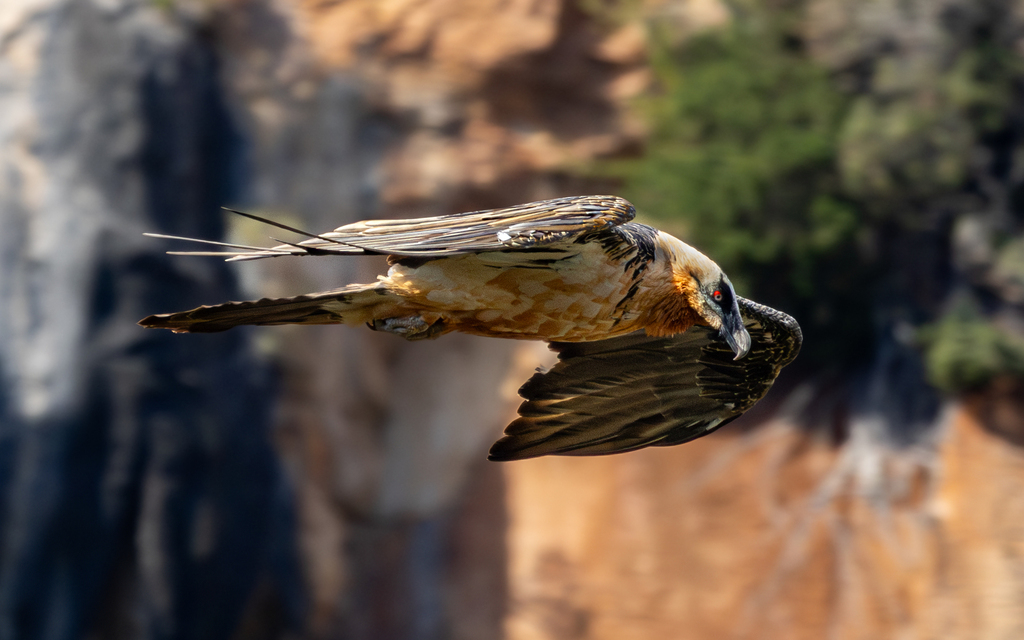
Photo: Diego González Dopico · CC-BY (May be cropped or resized)
Gypaetus barbatus
Basic stats
Diet
Bone makes up 70–90% of the diet; carrion in the breeding season
Habitat
Crags in high mountains
Range
Iran, southern Europe, East Africa, the Indian subcontinent, Tibet and the Caucasus
Clutch size
1–2 eggs, laid in mid-winter
Size
94–125cm
Wingspan
2.31–2.83m
Weight
4.5–7.8kg
The bearded vulture, or lammergeier, is a very large bird of prey, 94 to 125cm long with a wingspan of 2.31 to 2.83m and a weight of 4.5 to 7.8kg. It is the only known vertebrate whose diet consists of 70 to 90% bone. It has a feathered neck and a lozenge-shaped tail longer than the width of the wing. The adult is grey-blue to grey-black above and rusty and whitish elsewhere, the colour coming from dust-bathing or rubbing iron-rich mud on its body (Wikipedia, general species account).
It lives and breeds on crags in high mountains from Iran and southern Europe to the Indian subcontinent and Tibet. Juveniles are dark black-brown and take five to seven years to reach full maturity, first breeding at eight years or older. Females lay one or two eggs in mid-winter. It is silent apart from shrill whistles in breeding displays. The sources opened give no Nepal-specific counts.
Quick answers
- What does the Bearded Vulture eat?
- Bone makes up 70–90% of the diet; carrion in the breeding season
- What habitat does the Bearded Vulture live in?
- Crags in high mountains
- Where is the Bearded Vulture found?
- Iran, southern Europe, East Africa, the Indian subcontinent, Tibet and the Caucasus
- How many eggs does the Bearded Vulture lay?
- 1–2 eggs, laid in mid-winter
- How big is the Bearded Vulture?
- 94–125cm
- What is the wingspan of the Bearded Vulture?
- 2.31–2.83m
- How much does the Bearded Vulture weigh?
- 4.5–7.8kg
In Nepal
GBIF holds 1,341 records of the Bearded Vulture from 13 protected areas in Nepal, dated 1974 to 2026. Most come from Annapurna Conservation Area and Langtang National Park.
Where it has been recorded
- Annapurna Conservation Area 791 records, latest 2026
- Langtang National Park 264 records, latest 2024
- Sagarmatha National Park 178 records, latest 2026
- Manaslu Conservation Area 30 records, latest 2024
- Shey Phoksundo National Park 24 records, latest 2024
- Rara National Park 13 records, latest 2019
- Dhorpatan Hunting Reserve 11 records, latest 2024
- Kanchenjunga Conservation Area 7 records, latest 2016
Plus 5 more sites.
Covered in our place guides: Annapurna Conservation Area, Langtang National Park, Sagarmatha National Park, Kanchenjunga Conservation Area, Makalu Barun National Park.
Also in our other guides: Bhutan.
Records: GBIF occurrence data matched to park boundaries (© OpenStreetMap contributors, ODbL; Wikidata). Counts show recording effort, not how common the species is.