
 Wildlife
of Nepal
Grey Nightjar
Nightjars, Frogmouths & Swifts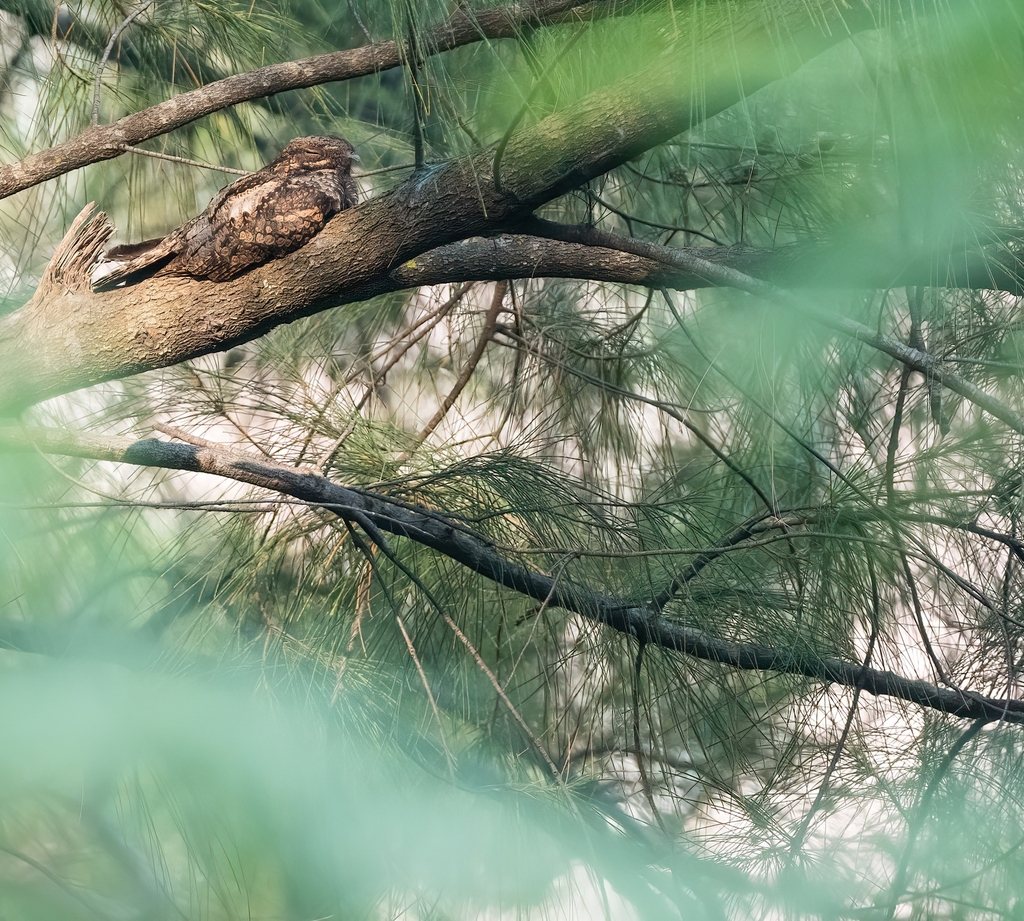
Photo: (c) Marco Chan, some rights reserved (CC BY) · CC-BY (May be cropped or resized)
Caprimulgus jotaka
Basic stats
Diet
Flying insects, including moths, beetles, flying ants and grasshoppers
Habitat
Forest, shrubland, cliffs, mountain rocks and man-made structures, up to 3,300m; eggs laid on the ground
Range
East Asia and westward along the Himalayas; resident in Nepal, India, Bhutan, Pakistan and elsewhere
Clutch size
2 eggs
The grey nightjar is a medium-sized nightjar with a large head, large eye, long tail, weak bill and short legs. The plumage is mottled and very like that of the Himalayan form of the jungle nightjar, with pale brown spots on the nape feathers and reddish-brown serrated edges on the flight feathers. It breeds from south-eastern Russia through China, Korea and Japan to northern Indochina and westward along the Himalayas (Wikipedia, general species account).
Its resident range includes Nepal, Bangladesh, Bhutan, China, India, Pakistan and Malaysia, and habitat extends up to 3,300m. Like all nightjars it is crepuscular to nocturnal, feeding on flying insects. The song is a series of hollow byuck notes lasting two to four seconds. It builds no nest, laying two eggs on the ground, on rocks or in dense thickets, between May and July.
Quick answers
- What does the Grey Nightjar eat?
- Flying insects, including moths, beetles, flying ants and grasshoppers
- What habitat does the Grey Nightjar live in?
- Forest, shrubland, cliffs, mountain rocks and man-made structures, up to 3,300m; eggs laid on the ground
- Where is the Grey Nightjar found?
- East Asia and westward along the Himalayas; resident in Nepal, India, Bhutan, Pakistan and elsewhere
- How many eggs does the Grey Nightjar lay?
- 2 eggs
In Nepal
GBIF holds 113 records of the Grey Nightjar from 8 protected areas in Nepal, dated 1973 to 2024. Most come from Annapurna Conservation Area and Raniban Forest (Pokhara).
Where it has been recorded
- Annapurna Conservation Area 38 records, latest 2024
- Raniban Forest (Pokhara) 27 records, latest 2024
- Shivapuri Nagarjuna National Park 13 records, latest 2023
- Chitwan National Park 12 records, latest 2022
- Langtang National Park 12 records, latest 2024
- Bardiya National Park 4 records, latest 2023
- Rara National Park 4 records, latest 2019
- Shukla Phanta National Park 3 records, latest 2019
Covered in our place guides: Annapurna Conservation Area, Chitwan National Park, Langtang National Park.
Also in our other guides: Bhutan.
Records: GBIF occurrence data matched to park boundaries (© OpenStreetMap contributors, ODbL; Wikidata). Counts show recording effort, not how common the species is.