
 Wildlife
of Nepal
Red Turtle-dove
Pigeons, Doves & Sandgrouse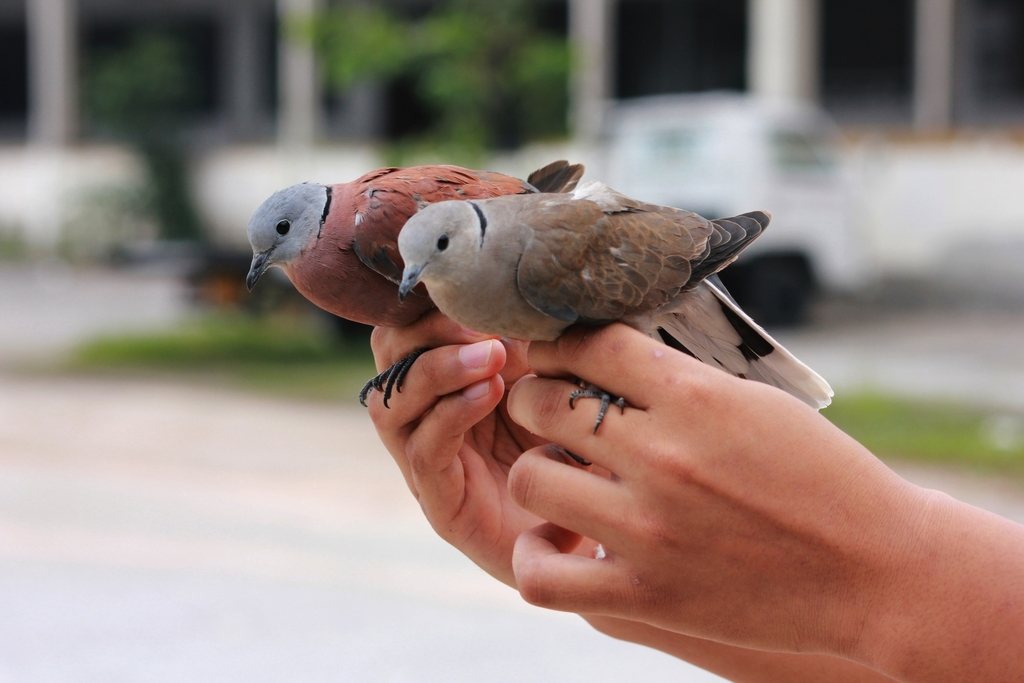
Photo: (c) Utain Pummarin, some rights reserved (CC BY) · CC-BY (May be cropped or resized)
Streptopelia tranquebarica
Basic stats
Range
Resident breeding bird in the tropics of Asia; summer migrant to Afghan valleys
Size
20.5–23cm
Weight
About 104g
The red collared dove, or red turtle dove, is a small pigeon, a resident breeding bird in the tropics of Asia. It is 20.5 to 23cm long and weighs about 104g. The male has a blue-grey head and a red-brown body with a black ring round the neck. The female is much plainer, pale brown like the larger Eurasian collared dove, and pinkish all over (Wikipedia, general species account).
There is a summer migration into the broader cultivated valleys of Afghanistan, where it breeds, and birds arriving in small flocks soon split up to form pairs and breed. The account opened is brief and gives no diet, nest or habitat details, nor anything specific to Nepal, so none are stated.
Quick answers
- Where is the Red Turtle-dove found?
- Resident breeding bird in the tropics of Asia; summer migrant to Afghan valleys
- How big is the Red Turtle-dove?
- 20.5–23cm
- How much does the Red Turtle-dove weigh?
- About 104g
In Nepal
GBIF holds 1,224 records of the Red Turtle-dove from 9 protected areas in Nepal, dated 1979 to 2025. Most come from Chitwan National Park and Koshi Tappu Wildlife Reserve.
Where it has been recorded
- Chitwan National Park 704 records, latest 2025
- Koshi Tappu Wildlife Reserve 340 records, latest 2024
- Bardiya National Park 68 records, latest 2024
- Shukla Phanta National Park 63 records, latest 2024
- Shivapuri Nagarjuna National Park 19 records, latest 2024
- Annapurna Conservation Area 13 records, latest 2024
- Parsa National Park 7 records, latest 2024
- Raniban Forest (Pokhara) 6 records, latest 2020
Plus 1 more sites.
Covered in our place guides: Chitwan National Park, Koshi Tappu Wildlife Reserve, Annapurna Conservation Area.
Also in our other guides: Bhutan.
Records: GBIF occurrence data matched to park boundaries (© OpenStreetMap contributors, ODbL; Wikidata). Counts show recording effort, not how common the species is.