
 Wildlife
of Nepal
Snow Pigeon
Pigeons, Doves & Sandgrouse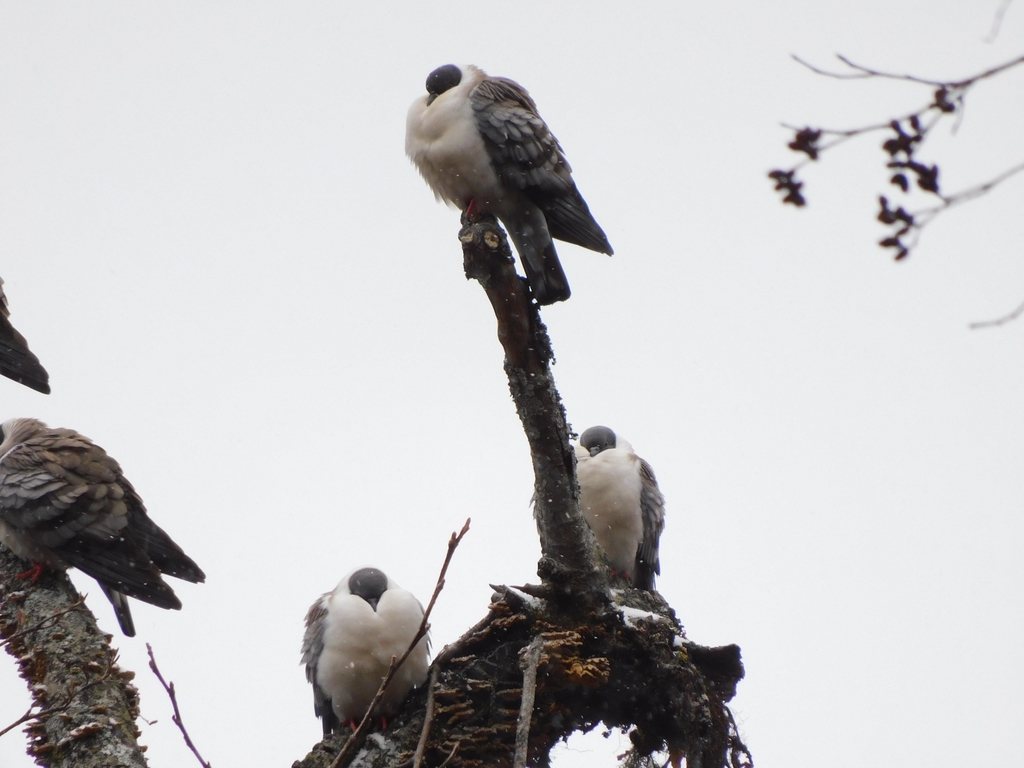
Photo: (c) Jagdish Singh Negi, some rights reserved (CC BY) · CC-BY (May be cropped or resized)
Columba leuconota
Basic stats
Diet
Grain, buds, bulbs, shoots, berries and seeds
Habitat
Hilly and open country in pairs or small groups; roosts on cliffs and nests in colonies in crevices
Range
Western Himalayas from western Afghanistan to Sikkim, and mountains of eastern Tibet
Clutch size
Usually 2 white eggs
The snow pigeon is a grey, black, pale brown and white pigeon of the hilly regions of central Asia. It has a blackish head contrasting with a white neck collar and white underparts shading to ashy on the abdomen, with a brownish-grey back and a white patch on the lower back. Two subspecies are recognised, the nominate form occurring in the western Himalayas from Afghanistan to Sikkim (Wikipedia, general species account).
Birds forage in open country in pairs or small groups on berries, grain, buds, bulbs, seeds and shoots, and often feed in fields by day but roost in cliffs. They breed in colonies, nesting in crevices or caves in cliff faces or on ledges. The nests are untidy interlaced structures of sticks, grass, straw and feathers, usually reused each year with minor repairs, with generally two white eggs.
Quick answers
- What does the Snow Pigeon eat?
- Grain, buds, bulbs, shoots, berries and seeds
- What habitat does the Snow Pigeon live in?
- Hilly and open country in pairs or small groups; roosts on cliffs and nests in colonies in crevices
- Where is the Snow Pigeon found?
- Western Himalayas from western Afghanistan to Sikkim, and mountains of eastern Tibet
- How many eggs does the Snow Pigeon lay?
- Usually 2 white eggs
In Nepal
GBIF holds 1,205 records of the Snow Pigeon from 9 protected areas in Nepal, dated 1979 to 2026. Most come from Langtang National Park and Sagarmatha National Park.
Where it has been recorded
- Langtang National Park 446 records, latest 2026
- Sagarmatha National Park 398 records, latest 2025
- Annapurna Conservation Area 280 records, latest 2025
- Manaslu Conservation Area 36 records, latest 2024
- Shey Phoksundo National Park 13 records, latest 2024
- Kanchenjunga Conservation Area 13 records, latest 2023
- Gaurishankar Conservation Area 10 records, latest 2024
- Makalu Barun National Park 5 records, latest 2023
Plus 1 more sites.
Covered in our place guides: Langtang National Park, Sagarmatha National Park, Annapurna Conservation Area, Kanchenjunga Conservation Area, Makalu Barun National Park.
Also in our other guides: Bhutan.
Records: GBIF occurrence data matched to park boundaries (© OpenStreetMap contributors, ODbL; Wikidata). Counts show recording effort, not how common the species is.