
 Wildlife
of Nepal
White-throated Needletail
Nightjars, Frogmouths & Swifts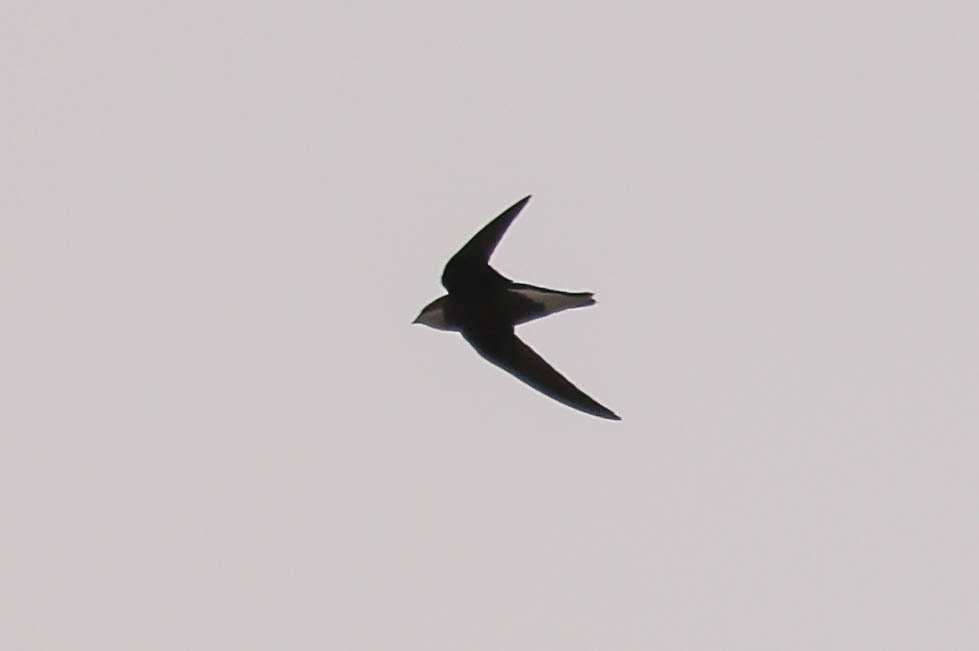
Photo: (c) Barry Langdon-Lassagne, some rights reserved (CC BY) · CC-BY (May be cropped or resized)
Hirundapus caudacutus
Basic stats
Diet
Small flying insects such as beetles, flies, bees and moths
Habitat
Nests in rock crevices in cliffs or hollow trees
Range
Breeds in Central Asia and southern Siberia; winters in the Indian subcontinent, Southeast Asia and Australia
Size
About 20cm
Weight
110–120g
The white-throated needletail, or needle-tailed swift, is a large swift with a robust, barrel-like body, about 20cm long and weighing 110 to 120g. It is greyish-brown except for a white throat and a white patch extending from the base of the tail to the flanks. Its speed in level flight is reputed to reach 170km/h, though this is unverified and about 75km/h is more likely (Wikipedia, general species account).
It is a migratory bird, breeding in Central Asia and southern Siberia and wintering south in the Indian subcontinent, Southeast Asia and Australia. It builds its nests in rock crevices in cliffs or in hollow trees, and feeds on small flying insects like beetles, flies, bees and moths.
Quick answers
- What does the White-throated Needletail eat?
- Small flying insects such as beetles, flies, bees and moths
- What habitat does the White-throated Needletail live in?
- Nests in rock crevices in cliffs or hollow trees
- Where is the White-throated Needletail found?
- Breeds in Central Asia and southern Siberia; winters in the Indian subcontinent, Southeast Asia and Australia
- How big is the White-throated Needletail?
- About 20cm
- How much does the White-throated Needletail weigh?
- 110–120g
In Nepal
GBIF holds 49 records of the White-throated Needletail from 6 protected areas in Nepal, dated 1982 to 2024. Most come from Chitwan National Park and Annapurna Conservation Area.
Where it has been recorded
- Chitwan National Park 22 records, latest 2024
- Annapurna Conservation Area 11 records, latest 2024
- Langtang National Park 5 records, latest 2022
- Bardiya National Park 5 records, latest 2023
- Sagarmatha National Park 3 records, latest 2024
- Khaptad National Park 3 records, latest 2013
Covered in our place guides: Chitwan National Park, Annapurna Conservation Area, Langtang National Park, Sagarmatha National Park.
Also in our other guides: Bhutan.
Records: GBIF occurrence data matched to park boundaries (© OpenStreetMap contributors, ODbL; Wikidata). Counts show recording effort, not how common the species is.