
 Wildlife
of Nepal
Ferruginous Duck
Ducks, Geese & Grebes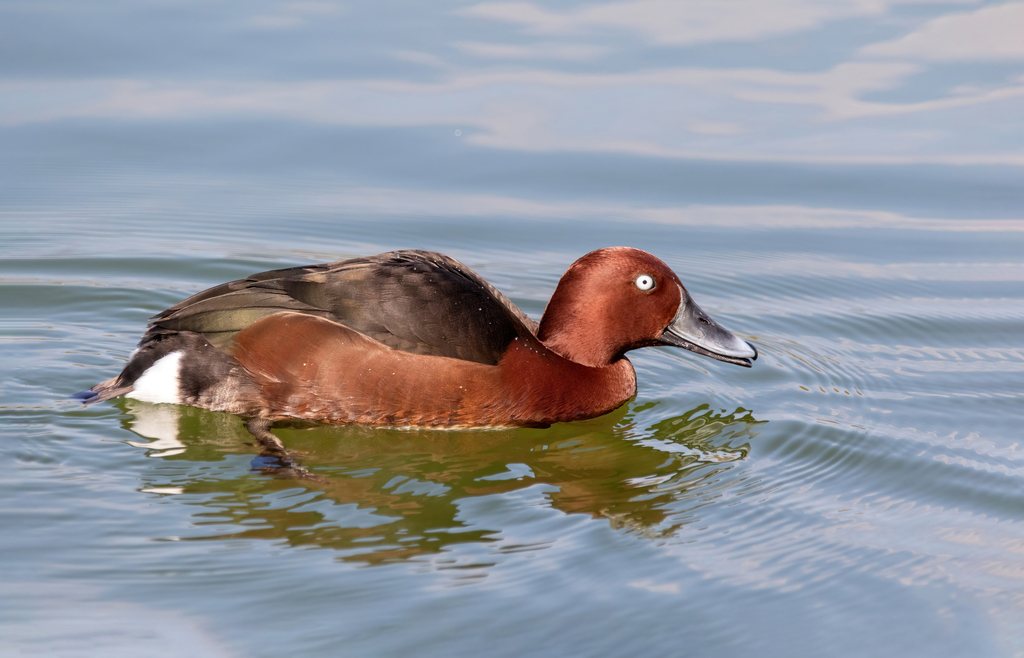
Photo: (c) Alexis Lours, some rights reserved (CC BY) · CC-BY (May be cropped or resized)
Aythya nyroca
Basic stats
Diet
Aquatic plants with some molluscs, aquatic insects and small fish; often at night
Habitat
Nests on the ground close to water or floating among emergent vegetation
Range
Breeds from Iberia and the Maghreb east to western Mongolia
Incubation period
25–27 days
The ferruginous duck, also called the white-eyed pochard, is a medium-sized diving duck native to the Palearctic. The breeding male is rich dark chestnut on the head, breast and flanks, with contrasting pure white undertail coverts, and a white belly and underwing patch show in flight. Males have a yellow eye and females a dark eye, and females are duller and browner (Wikipedia, general species account).
It feeds mainly by diving or dabbling, taking aquatic plants with some molluscs, aquatic insects and small fish, often at night. Eggs are laid from the end of April or early May in a ground nest close to water, or a floating nest among emergent vegetation, and are incubated for 25 to 27 days. The sources opened say little about where it winters in South Asia.
Quick answers
- What does the Ferruginous Duck eat?
- Aquatic plants with some molluscs, aquatic insects and small fish; often at night
- What habitat does the Ferruginous Duck live in?
- Nests on the ground close to water or floating among emergent vegetation
- Where is the Ferruginous Duck found?
- Breeds from Iberia and the Maghreb east to western Mongolia
- How long are the eggs of the Ferruginous Duck incubated?
- 25–27 days
In Nepal
GBIF holds 164 records of the Ferruginous Duck from 6 protected areas in Nepal, dated 1983 to 2024. Most come from Koshi Tappu Wildlife Reserve and Shukla Phanta National Park.
Where it has been recorded
- Koshi Tappu Wildlife Reserve 124 records, latest 2024
- Shukla Phanta National Park 14 records, latest 2024
- Chitwan National Park 11 records, latest 2021
- Rara National Park 6 records, latest 2020
- Bardiya National Park 5 records, latest 2024
- Annapurna Conservation Area 4 records, latest 2024
Covered in our place guides: Koshi Tappu Wildlife Reserve, Chitwan National Park, Annapurna Conservation Area.
Also in our other guides: Bhutan.
Records: GBIF occurrence data matched to park boundaries (© OpenStreetMap contributors, ODbL; Wikidata). Counts show recording effort, not how common the species is.