
 Wildlife
of Nepal
Grey-capped Emerald Dove
Pigeons, Doves & Sandgrouse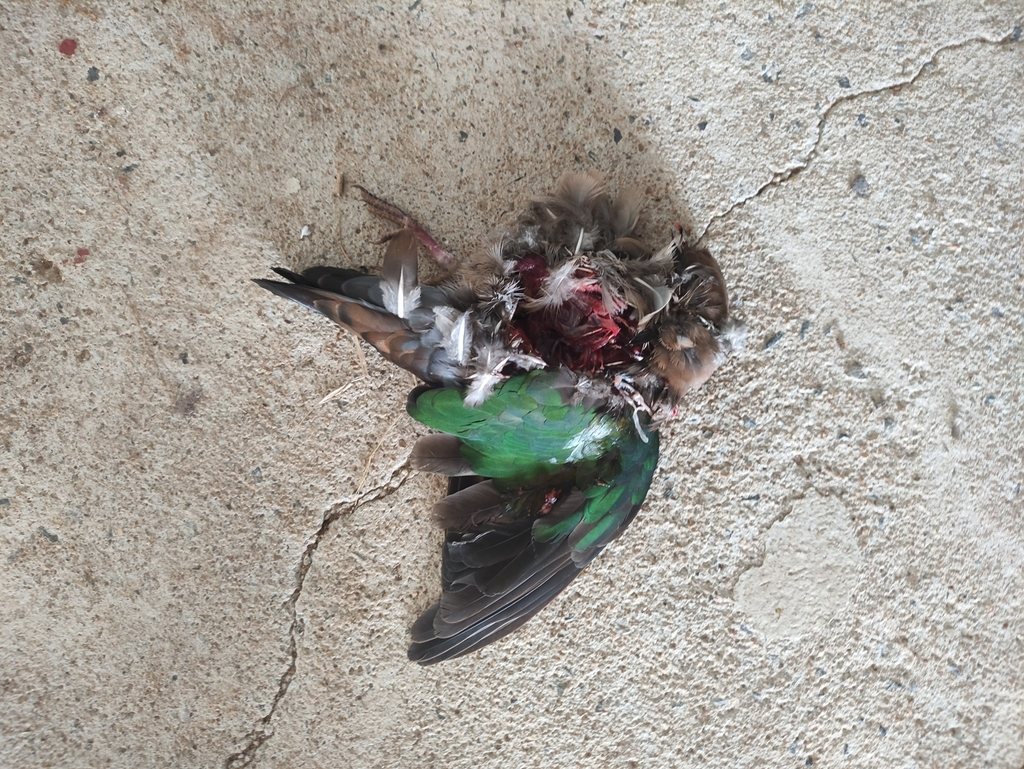
Photo: (c) Nae Tan, some rights reserved (CC BY) · CC-BY (May be cropped or resized)
Chalcophaps indica
Basic stats
Diet
Seeds and fruits of a wide variety of plants, taken mostly from the ground
Habitat
Tropical and subtropical forest; spends little time in trees except to roost
Range
Tropical and subtropical Indian subcontinent and Southeast Asia
Clutch size
2 cream-coloured eggs
Size
23–27cm
The emerald dove, also called the grey-capped emerald dove, is a stocky, medium-sized pigeon, typically 23 to 27cm long, resident across the tropical and subtropical Indian subcontinent and Southeast Asia. The head and underparts are dark vinous pink, the eyes dark brown, the bill bright red and the legs rufous. The male has a white shoulder patch and a grey crown, which the female lacks (Wikipedia, general species account).
The call is a low, soft, moaning series of six to seven coos, starting quietly and rising. It is single, in pairs or in small groups, and searches for fallen fruit on the ground, spending little time in trees except when roosting. It is generally tame and approachable. It builds a scant stick nest in a tree, up to five metres up, and lays two cream-coloured eggs.
Quick answers
- What does the Grey-capped Emerald Dove eat?
- Seeds and fruits of a wide variety of plants, taken mostly from the ground
- What habitat does the Grey-capped Emerald Dove live in?
- Tropical and subtropical forest; spends little time in trees except to roost
- Where is the Grey-capped Emerald Dove found?
- Tropical and subtropical Indian subcontinent and Southeast Asia
- How many eggs does the Grey-capped Emerald Dove lay?
- 2 cream-coloured eggs
- How big is the Grey-capped Emerald Dove?
- 23–27cm
In Nepal
GBIF holds 1,366 records of the Grey-capped Emerald Dove from 8 protected areas in Nepal, dated 1973 to 2025. Most come from Chitwan National Park and Bardiya National Park.
Where it has been recorded
- Chitwan National Park 911 records, latest 2025
- Bardiya National Park 270 records, latest 2024
- Shukla Phanta National Park 106 records, latest 2024
- Raniban Forest (Pokhara) 40 records, latest 2024
- Koshi Tappu Wildlife Reserve 23 records, latest 2023
- Shivapuri Nagarjuna National Park 6 records, latest 2022
- Parsa National Park 5 records, latest 2023
- Annapurna Conservation Area 5 records, latest 2024
Covered in our place guides: Chitwan National Park, Koshi Tappu Wildlife Reserve, Annapurna Conservation Area.
Also in our other guides: Bhutan.
Records: GBIF occurrence data matched to park boundaries (© OpenStreetMap contributors, ODbL; Wikidata). Counts show recording effort, not how common the species is.